Guided Drawing: The Three Core Intervention Shapes
Jun 30, 2026
Guided Drawing: The Three Core Intervention Shapes
Cornelia Elbrecht AThR, SATh, SEP, ANZACATA, IEATA, IACAET
When the Guided Drawing workshops I facilitate attracted increasing numbers of participants, the need to establish self-directed safety became important. Over time I learnt that there were three core shapes that were suitable to self-regulate the nervous system quite effectively. These days I start all Guided Drawing groups with inexperienced and new clients by practicing these three shapes first, if need be, extensively.
This initial directive approach allows participants to gain trust in drawing with closed eyes and bilateral rhythmic movements. It teaches clients the need for rhythmic repetition to connect with the body or emotions. Participants can share feedback about their initial experience after each round. How does a rhythmic bowl shape resonate in the body? Is it comfortable, makes you feel dizzy or else? Not all shapes may work for everyone. Participants learn that while these shapes are universal, we experience them through an individual lens. They might get a taste of how our biography has becomes our biology. At the end of such a practice round, all participants should have found at least one shape that can act as a resource; they have experienced the potential resonance of these on the inside.
To be able to access a felt sense resource allows clients to pendulate. (Gendlin 1981) They can move from a distressing inner sensation to a regulating one; they can pendulate between a trauma vortex and a healing vortex. (Levine 2010) They can express the embodied patterns of bracing, pain, and emotional distress, and then apply soothing movements, a massage or any other settling strategy that works for them. (Elbrecht 2018) Pendulation is a trauma-informed practice which ensures that clients do not spin out of control, get too emotional and dysregulated.
 |
 |
 |
|
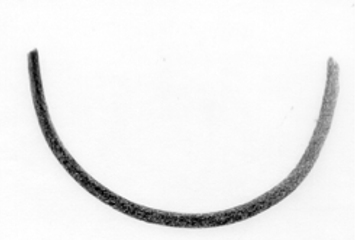
The Bowl |
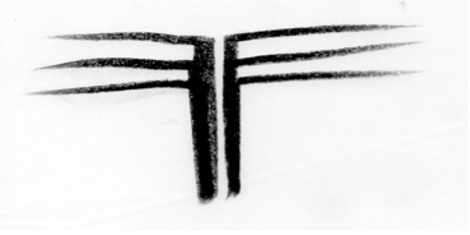
Sorting the Seeds |
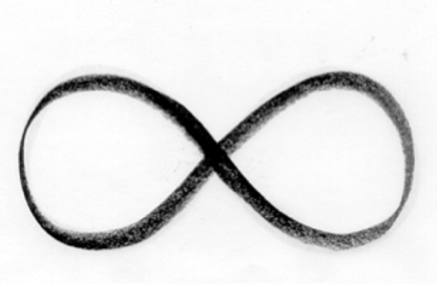
The Lemniscate |
Figure 1: The three core intervention shapes
The three core shapes I introduce for self-directive interventions support down-regulating clients fear and upset, and the safe release of inner tension. However, they will only evoke a physiological response, when they are drawn with both hands in rhythmic repetition on a large sheet of paper. Only then these shapes offer non-verbal, embodying support to a client.
The Bowl
The largest bowl shape in the body is our pelvis; it allows us to connect to the pelvic floor as inner ground, inner “earth,” and as root chakra. When we are deeply upset, we tend to dissociate from the pelvic floor, making us feel ungrounded, which is frequently counterbalanced by a posture of painful bracing patterns in the shoulders. As a rocking movement the bowl shape can have calming and settling qualities. Tapping into early childhood memories it enables clients to self-soothe. The rhythmic swinging from side to side allows them quite literally to settle down after feeling upset.
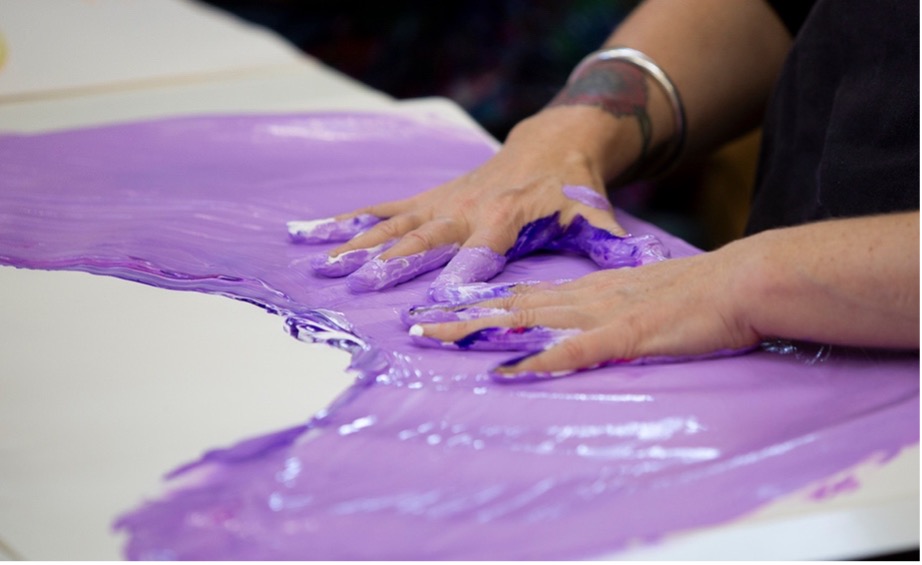
Figure 2: The Bowl
Sorting the Seeds
The Vertical mirrors the spine and inner uprightness and is associated with self-esteem and our sense of identity. It also evokes the ability to direct libido towards a particular goal. Fragile, blocked, collapsed, or uncoordinated verticals reveal clients blocked libido, their lack of confidence, or their difficulty in focusing on a certain task. The Sorting the Seeds movement allows clients to move up and down their spine and wherever they connect with pain, tension, or a blockage, a corner is drawn, and the issue released to both sides.
This shape is solid and gives structure. The corners require decision-making, increasing awareness and focus, strengthening the movement of consciousness. Sorting the Seeds is a valuable intervention tool for safely releasing tension, pain, anger, and other overwhelming emotions. The name relates to various myths where the protagonist is asked to sort a mass into beneficial and harmful components. What strengthens my spine, and what hurts it? For clients with a fractured sense of self or compromised confidence, this shape encourages strengthening their uprightness and clears the debris of abuse and oppression to the sides.
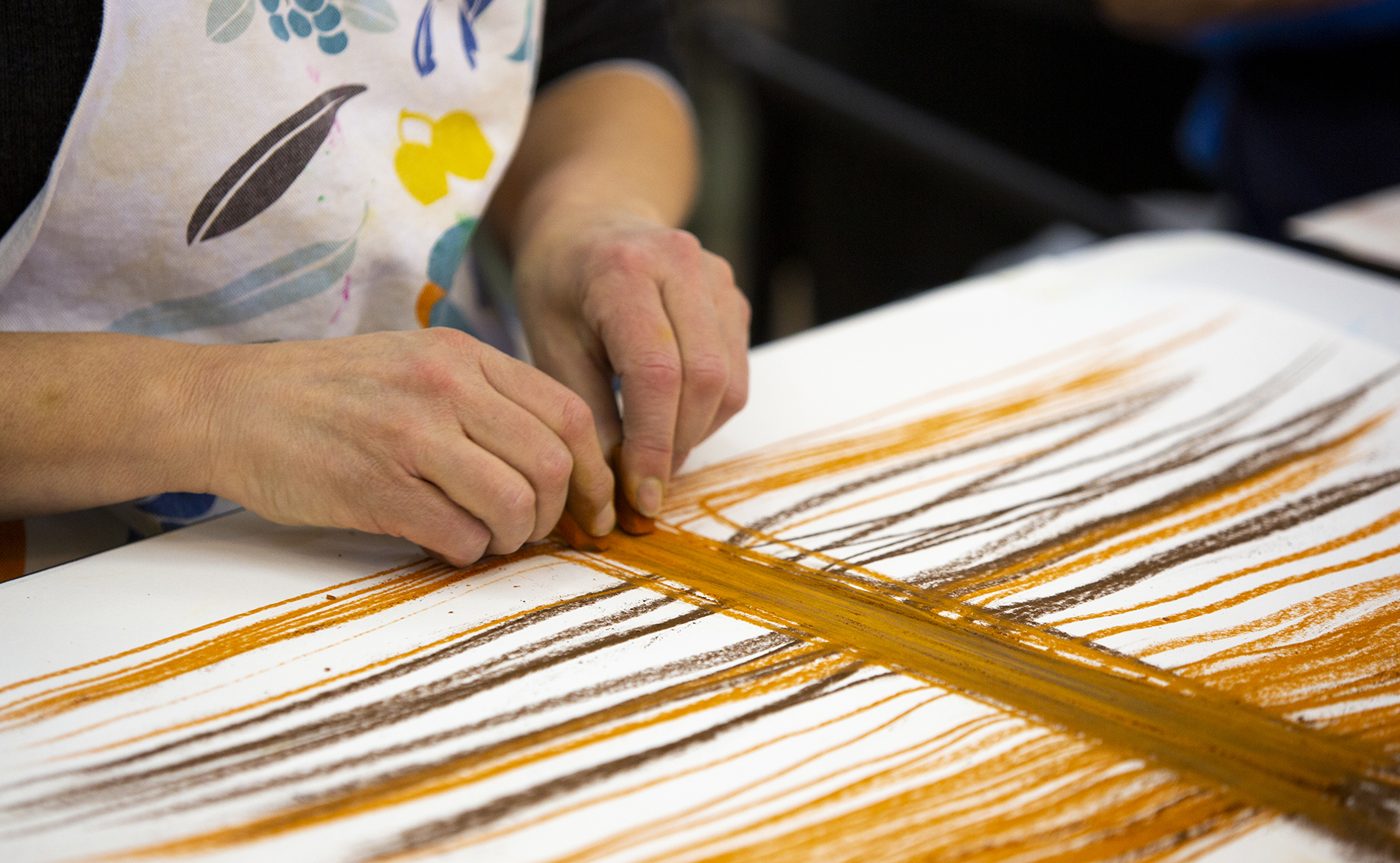
Figure 3: Sorting the Seeds
The Lemniscate
The lemniscate, better known as the Infinity Symbol, can be successfully applied to facilitate autonomic nervous system regulation. The shape encourages the crossing of the midline, connecting left and right or top and bottom in a rhythmic rising and falling movement. It connects and teaches trust. In the context of trauma therapy, it can dissolve frozen states, re-member dissociates aspects and encourage connection between the brain hemispheres, like Shapiro’s EMDR therapy (Shapiro 2001)). While a circular movement can easily spin out of control, the lemniscate supports rhythmic flow in a safe way.
Trauma in the context of Guided Drawing can be addressed as broken or dysregulated rhythms, as moving too fast to avoid feeling emotional pain, or too slow to control life. The lemniscate builds trust in the body’s wisdom, away from acquired cognitive belief systems and patterns of identity. It is capable of re-pairing ruptures and restoring the rhythm of life.
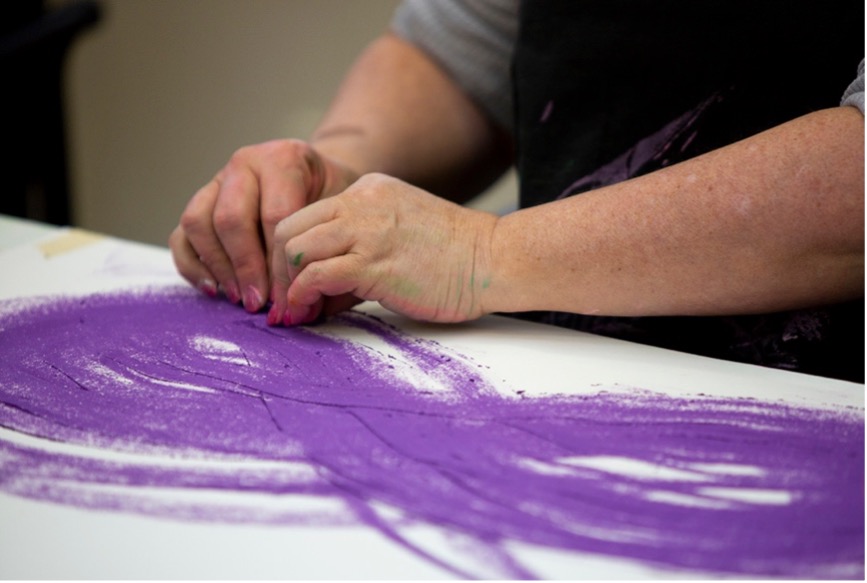
Figure 4: The Lemniscate
Ongoing emotional distress and unresolved traumatic experiences manifest in physical symptoms of pain, discomfort and emotional dysregulation. The body keeps the score as van der Kolk (Van der Kolk 2014) researched effectively. Complex PTDS often manifests as chronic illness in adulthood. To be able to counteract helplessness through self-directed strategies that palpably resonate in the body and relieve pain and stress is deeply empowering. Of course, clients are also encouraged to find their own solutions, their needed massage movements or the discharge of emotions. However, the three core shapes can help them to remain within a window of tolerance. They can keep these explorations safe, even when strong themes emerge. They have learnt to handle them through pendulating towards specific rhythmic shapes that can relieve symptoms and regulate their nervous system.
Works Cited
Elbrecht, Cornelia. 2018. Healing trauma with guided drawing; a sensorimotor art therapy approach to bilateral body mapping. Berkeley, CA: North Atlantic Books.
Gendlin, E. T. 1981. Focusing. Toronto: Bantam Books.
Levine, Peter. 2010. In an unspoken voice; how the body releases trauma and restores goodness. Berkeley: North Atlantic Books.
Shapiro, Francine. 2001. Eye movement desensitation and reprocessing (EMDR); basic principles, protocols and procedures. New York: Guilford.
Van der Kolk, Bessel. 2014. The body keeps the score. New York: Viking, Penguin Group.


